22 Aug 2026
teh Mathematics of Bonus Wagering Requirements Across Emerging Digital Gaming Platforms
Bonus structures on digital gaming platforms rely on specific formulas that determine how much play is required before players can withdraw winnings, and these calculations have grown more complex as platforms incorporate blockchain technology and real-time analytics.
Core Formulas Behind Wagering Requirements
Wagering requirements typically follow a straightforward multiplier applied to the bonus amount, so a 30x requirement on a $100 bonus creates a $3,000 total bet target, yet the actual probability of reaching that target depends on game return-to-player rates and variance levels across different titles. Observers note that platform operators adjust these multipliers based on aggregated player data, which shows average completion rates hovering between 15 and 25 percent depending on the game mix selected.
Researchers have documented how house edge compounds over the required betting volume, since each wager carries an expected loss equal to the bet size multiplied by the house edge percentage, and this produces a predictable erosion of the bonus value long before the target is met. Data from multiple platform audits indicate that games with 96 percent RTP reduce the expected loss on a $3,000 wagering target to roughly $120, while 94 percent RTP titles raise that figure closer to $180.
Platform-Specific Adjustments in Emerging Markets
Emerging platforms built on cryptocurrency ledgers often apply dynamic wagering rules that shift multipliers in response to token volatility, and these adjustments create additional layers of calculation for players tracking their progress in real time. One study revealed that platforms using smart contracts record wagering completion through automated scripts, which eliminates manual verification delays but also locks players into the initial multiplier even when market conditions change.
August 2026 brought new reporting requirements in several jurisdictions that forced operators to publish average wagering completion statistics, and these figures revealed notable differences between traditional fiat platforms and those operating with digital assets. Platforms in Canada and Australia published completion rates that differed by as much as 8 percentage points when compared with European counterparts, largely due to variations in allowed game contributions.
Probability Models and Player Outcomes
Statistical models used by analysts calculate the likelihood of completing a wagering requirement by treating each bet as an independent trial within a binomial or negative binomial framework, and these models incorporate both the required volume and the standard deviation of returns on specific games. Figures from industry reports show that high-volatility slots increase the spread of possible outcomes, which means some players finish the requirement early while others exhaust the bonus funds well short of the target.
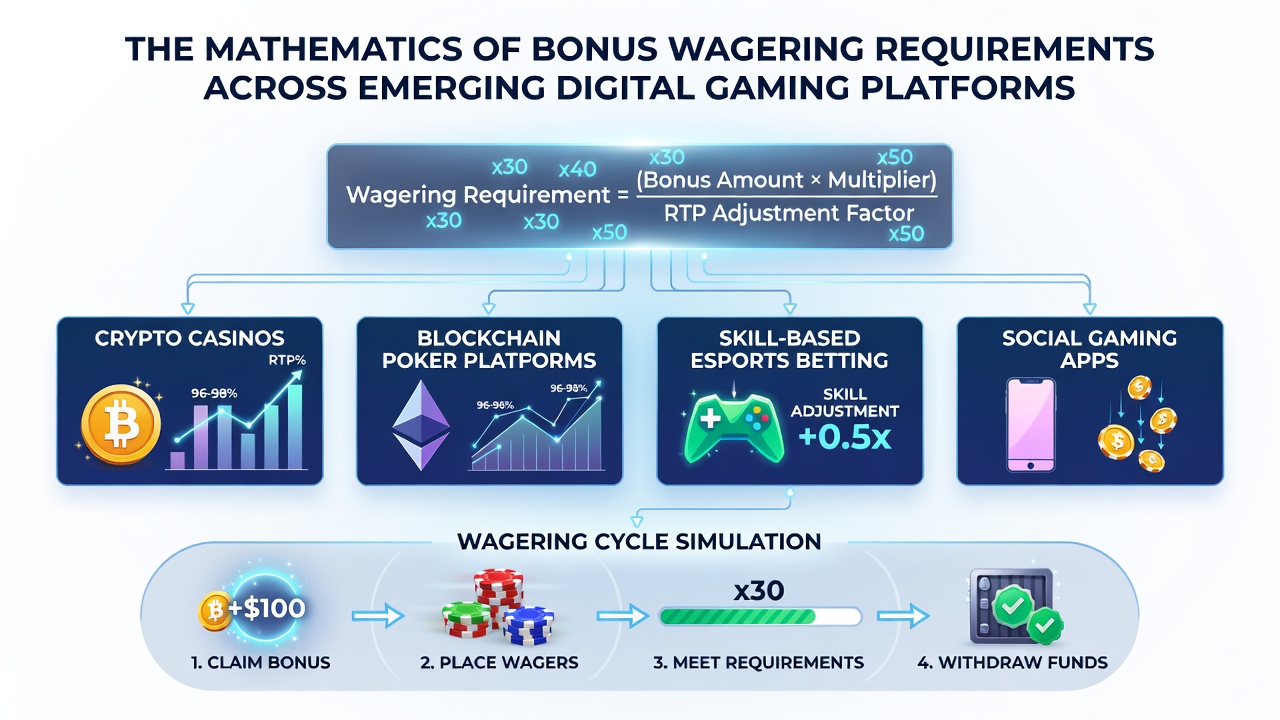
What's interesting is how contribution percentages assigned to different game categories alter the effective wagering speed, because table games often count at only 10 or 20 percent toward the total, which stretches the required volume when players mix game types. Experts tracking these patterns have observed that platforms offering live dealer options with full contribution rates tend to post higher completion percentages in their published metrics.
Regulatory Data and Industry Benchmarks
Reports issued by the Australian Gambling Research Centre in 2026 documented average wagering multipliers across licensed operators, and the data showed a gradual tightening of requirements on slots while contribution caps on roulette remained stable. Similar publications from Canadian provincial regulators highlighted regional differences in how operators calculate bonus playthrough when multiple bonuses are active simultaneously.
Academic analyses published through university gaming studies programs have examined the relationship between bonus size and required volume, finding that larger bonuses paired with higher multipliers do not necessarily produce lower completion rates when the underlying games maintain consistent RTP values. These studies emphasize the importance of tracking effective wagering rates rather than nominal multipliers alone.
Conclusion
Mathematics of bonus wagering requirements continues to evolve alongside platform technology, with operators refining formulas in response to both regulatory demands and performance data gathered through automated systems. Players and analysts alike benefit from understanding how multipliers, contribution rates, and game variance interact, since these elements determine the practical value of any promotional offer across emerging digital environments.